Patchy Self-Tan: Five Steps to Fix It (Without Starting Over)
Quick Answer: Patchy self-tan is nearly always a preparation problem showing up after the fact - dry areas absorbed more product. Fix it in order: exfoliate the darkest patches specifically, use an oil-based product to lift stubborn areas, blend the edges with a damp mitt, even out the tone with a gradual tanner, and only then consider reapplying. Starting over on top of patches makes them worse.
The frustration with self-tan is that the mistake happens at application and only becomes visible six hours later, by which point the instinct is to add more product. That instinct is the one that turns a fixable patch into a two-week problem.

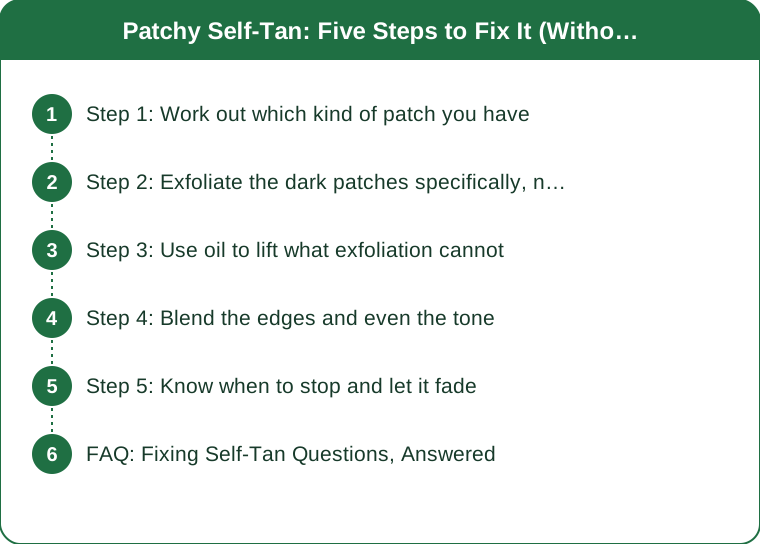
Step 1: Work out which kind of patch you have
The fix depends entirely on the cause, and there are three distinct types that look similar in the mirror.
Type A: Dark concentrated patches. Usually at the knees, elbows, ankles, knuckles, and heels. Cause: these areas have thicker, drier skin that absorbs more of the DHA - the active ingredient that reacts with the skin’s surface proteins. More absorption means more colour.
Type B: Streaks and lines. Usually on the shins, forearms, and the backs of the legs. Cause: application technique - product applied in lines rather than circular motions, or a mitt that dried out partway through.
Type C: Missed patches and pale gaps. Behind the knees, the middle of the back, the sides of the torso. Cause: simply not reaching them, or the product rubbing off before it developed.
Why the distinction matters: dark patches need removing, streaks need blending, and gaps need filling. Applying more tan to a body with all three makes the dark patches darker while barely touching the gaps.
Give it 24 hours before judging. Most self-tans continue developing for 8 to 12 hours, and some for longer. A patch that looks alarming at hour four may have evened out considerably by hour twelve. Do not fix anything on the first evening.
One important note before you start removing anything: if the patchiness came with itching, burning, or a rash rather than just uneven colour, that is a reaction rather than a technique problem. Rinse it off and stop using the product.
Step 2: Exfoliate the dark patches specifically, not everywhere
The most common repair mistake is scrubbing the whole body, which lightens the good areas along with the bad and leaves you exactly as uneven as before.
How to target:
- Use a physical exfoliant - a scrub, an exfoliating mitt, or a textured cloth - only on the darkest areas
- Work in small circles for 20 to 30 seconds per patch. Longer risks irritation and a visible pale spot.
- Warm water and steam first. A few minutes under a warm shower softens the skin and makes removal considerably easier.
- Reassess before doing more. Colour lifts gradually and it is easy to overshoot in one session.
For stubborn areas, chemical exfoliants work better than physical ones:
- A glycolic or lactic acid body product applied to the patch for the time on the label. These loosen the bonds between surface skin cells rather than abrading them, which is gentler and often more even.
- Leave 10 to 15 minutes, then rinse. Do not layer acid onto skin you have just scrubbed hard - pick one method per session.
Areas that need particular care:
- Knuckles and toes - very thin skin over bone, very easy to overdo
- Face - use a gentler product than you would on the body
- Anywhere freshly shaved - wait 24 hours
A word on baking soda and lemon juice, which appear in every home remedy list: both work by being abrasive or acidic, both disrupt the skin’s barrier, and both can leave you with irritated skin that tans even more unevenly next time. There are gentler products designed for this.
Step 3: Use oil to lift what exfoliation cannot
Oil is the most underused tool for tan removal, and it works on a different principle from scrubbing.
Why it works: oil-based products loosen the tanned surface cells and help them shed. It is slower than scrubbing and considerably gentler, which makes it the right choice for large areas or delicate skin.
How to do it:
- Apply any body oil, baby oil, or coconut oil generously to the patchy area
- Leave it on for 30 minutes minimum, longer for stubborn areas
- Then shower in warm water and use a mitt with light pressure
- Repeat rather than escalating. Two gentle sessions beat one aggressive one.
A useful accident to know about: oil-based products remove tan. Which means the body oil in your evening routine is quietly lifting your tan every night, and the rich body butter you apply to your legs before bed is part of why they faded first. Switch to a water-based or tan-specific moisturiser while you have a tan you want to keep.
Purpose-made tan removers are essentially this principle in a more convenient format, often combining oil with a mild exfoliating agent. They work well and are worth having if you self-tan regularly.
Other things that lift tan, useful either as fixes or as things to avoid:
- A long hot bath, particularly with bath oil
- Swimming pools - chlorine fades tan noticeably
- Sweat - a hard workout the morning after application is a common and unrecognised cause of patchiness
- Exfoliating body washes used absentmindedly

Step 4: Blend the edges and even the tone
Once the worst patches are lifted, the remaining problem is usually transitions - the visible line where tanned meets untanned.
Blending existing edges:
- A damp application mitt with no product on it, worked in circles over the transition line, softens edges surprisingly well
- A tiny amount of moisturiser on the mitt helps it glide without dragging colour
- Work outward from dark to light, never the reverse
Evening out overall tone with a gradual tanner:
This is the step that finishes the repair, and gradual tanner is the right product because it builds slowly and is very difficult to overdo.
- Apply a gradual tanning lotion over the whole area, including both the lifted patches and the surrounding skin
- The lighter areas take more colour than the already-tanned areas, which pulls the tone together
- One application daily for two or three days, assessing between each
Why not just reapply the original self-tan: a full-strength product applied over uneven skin exaggerates the unevenness, because the areas that absorbed too much last time will do so again. Gradual tanner is forgiving in exactly the way full-strength product is not.
Prevention for next time, since this is where the actual solution lives:
- Exfoliate 24 hours before, not immediately before - freshly exfoliated skin is more absorbent
- Moisturise the dry areas only - knees, elbows, ankles, knuckles, heels - about 10 minutes before applying
- Use a mitt, always, and apply in circular motions rather than lines
- Use whatever is left on the mitt for hands, feet, and knees rather than fresh product
- Wait for skin to be completely dry before dressing, and wear loose dark clothing
Step 5: Know when to stop and let it fade
The final step is the one that requires the most restraint, and it is frequently the correct answer.
Self-tan fades on its own as skin cells shed, typically over 5 to 10 days depending on the product, your skin, and how often you exfoliate. If the patchiness is mild and you have no event, doing nothing is a legitimate strategy.
When to stop trying to fix it:
- If the skin is becoming irritated, red, or sore. Repeated exfoliation damages the barrier, and irritated skin tans worse next time.
- If you have exfoliated the same area twice in 48 hours - give it a rest
- If the patch is on the face and not resolving - facial skin is thinner and less tolerant of the removal methods above
Speeding up an overall fade, gently:
- Warm baths with a small amount of oil, most days
- A gentle exfoliating body wash once daily rather than an aggressive scrub
- Swimming, if you have access
- Stop reapplying anything while it evens out
Covering while it fades: darker or patterned clothing, and for a single event a body makeup or leg tint product covers a great deal for a day and washes off entirely.
The honest long view: self-tan is a skill that takes several attempts to get right, and the variables are your specific product, your specific skin, and your specific routine. Nearly everyone who applies it well now had a patchy first few goes. The information from a bad application - which areas went dark, which got missed - is exactly what makes the next one better, so it is worth noting where the problems were before they fade.
FAQ: Fixing Self-Tan Questions, Answered
How long does self-tan take to fade completely?
Usually 5 to 10 days, faster with frequent exfoliation, hot baths, swimming, or oil-based moisturisers. Gradual tanners fade faster than full-strength ones.
Can I fix patchy tan the same day I applied it?
Wait at least 8 to 12 hours for development to finish. What looks patchy at hour four often evens out. Trying to fix a developing tan usually creates worse patches.
Why do my hands and feet always go too dark?
The skin there is thicker and drier, and it absorbs more product. Apply moisturiser to those areas before tanning and use only the residue left on the mitt rather than fresh product.
Does lemon juice or baking soda really remove fake tan?
They work to a degree by being acidic or abrasive, and both can disrupt the skin barrier. A body oil soak or a purpose-made remover achieves the same thing with less irritation.
Is it safe to exfoliate every day while fixing patches?
No. Daily physical exfoliation on the same area will irritate the skin. Alternate days at most, and switch to gentler methods such as oil if the skin feels tight or sore. If skin becomes red, sore, or itchy, stop and see a professional if it does not settle.
TL;DR:
- Wait 12 to 24 hours before judging - tan continues developing and often evens out
- Exfoliate only the dark patches, not the whole body, and stop before the skin gets irritated
- Oil soaks lift stubborn colour more gently than scrubbing does
- Even the tone with a gradual tanner rather than reapplying full-strength product
- Prevention lives in prep: exfoliate 24 hours before, moisturise the dry spots, always use a mitt
Patchy self-tan feels like a disaster and is almost always a five-day problem at worst. Work in the order above, resist the urge to add more product, and note which areas went wrong - that list is the whole of what you need for a better result next time.
Keep Reading
This article is for general informational and styling purposes only. Fit, sizing, and product availability may vary.