Five Body Skin Setups for the Weeks Before the Heating Goes On
Quick Answer: Skin gets dry in autumn before the weather is actually cold, because indoor heating drops humidity long before outdoor temperatures bottom out. The five setups below fix it at each point of failure: a shorter cooler shower, moisturizing within two minutes of getting out, a gentler approach to rough patches than scrubbing, a separate hand routine, and one overnight treatment a week. Start before the skin is visibly dry — prevention is far easier than repair.
Every year skin gets worse in October and people blame the cold. It isn’t the cold, mostly. It’s that the heating went on and the indoor humidity fell off a cliff.
Here are five setups, each solving a different failure point.

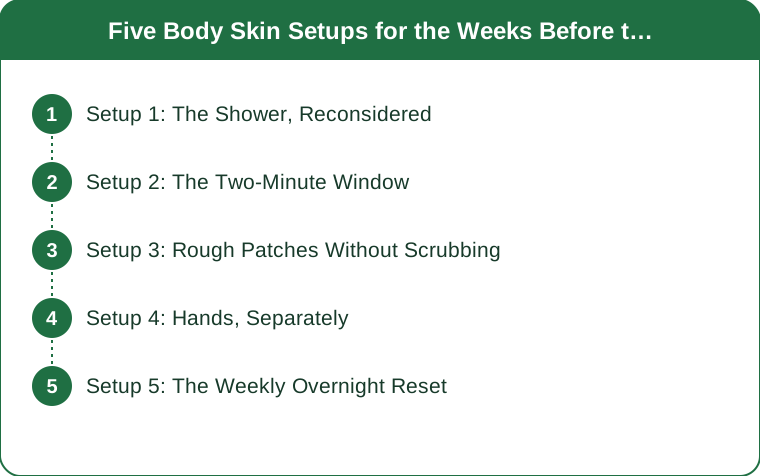
Setup 1: The Shower, Reconsidered
The shower is where most autumn skin damage happens, and it’s the easiest thing to change.
What’s going wrong: hot water strips the skin’s lipid barrier — the layer of fats between skin cells that holds water in. A long hot shower removes a meaningful amount of it, and the skin can take hours to rebuild what a ten-minute shower removed.
The setup:
- Water temperature: warm, not hot. The test is whether your skin is pink when you get out. If it is, it was too hot.
- Duration: 5 to 10 minutes. Long showers are the specific problem, more than temperature alone.
- Cleanser: a cream or oil-based body wash, not a foaming one. Sulfates and high-foaming surfactants are efficient at removing oil, which is precisely the problem. Look for a wash that feels slippery rather than squeaky.
- Where you actually need soap: armpits, groin, feet. The rest of your body gets clean from water and light contact. Soaping your entire body daily is a modern habit, not a hygiene requirement, and it’s a significant contributor to winter dryness.
- Skip the loofah for now. Daily mechanical scrubbing on already-compromised skin makes it worse.
One change, if you only make one: shorter and cooler. It costs nothing and it’s the largest single factor.
Setup 2: The Two-Minute Window
The most important timing rule in body skincare, and the one most people get wrong.
The principle: after a shower your skin is saturated with water. That water starts evaporating immediately, and as it evaporates it can pull additional moisture from deeper layers — leaving you drier than before you showered. Applying a moisturizer while skin is still damp traps that water in.
The window is roughly three minutes. Sooner is better.
The setup, physically:
- Moisturizer within reach of the shower, not in a cupboard in another room. This single logistical change is what determines whether the habit happens.
- Pat dry, don’t rub. Leave skin visibly damp.
- Apply to damp skin, all over, before you get dressed.
What to use: an ointment or cream, not a lotion, once the air turns dry. The difference matters — lotions are mostly water and evaporate; creams are thicker emulsions; ointments are largely oil and are the most occlusive. For most people a good cream works for the body and an ointment is reserved for hands, feet, and rough patches.
Ingredients worth having: ceramides (they replace the lipids you lose), glycerin or hyaluronic acid (they draw water in), and an occlusive like petrolatum, shea, or dimethicone (they hold it there). A product with all three is doing the whole job.

Setup 3: Rough Patches Without Scrubbing
Upper arms, thighs, elbows, and heels. The instinct is to scrub, and scrubbing is usually wrong.
Why scrubbing backfires: most autumn rough texture is dryness, and physical exfoliation on dry, barrier-compromised skin causes micro-irritation that makes it rougher. The temporary smoothness after a scrub is followed by worse texture two days later.
What to do instead:
- Chemical exfoliation, gently. A lotion with urea (10 to 20 percent), lactic acid, or salicylic acid loosens the bonds between dead cells rather than sanding them off. Use it 2 to 3 times a week, not daily.
- Urea specifically for the bumpy upper arms — keratosis pilaris responds better to urea and lactic acid than to any scrub.
- Moisturize heavily on the off days. Exfoliation without moisturizing is half a routine and it’s the half that irritates.
- For heels: urea at higher strength, applied at night, with socks over it.
- Elbows and knees: an ointment, not a lotion. These areas have few oil glands and need the occlusive.
Give it three weeks. Cell turnover takes about that long, and switching products every five days because nothing changed is why people conclude nothing works.
If a patch is red, itchy, spreading, or cracking and bleeding, that’s a dermatologist question rather than a moisturizer question. This is general information, not medical advice.
Setup 4: Hands, Separately
Hands need their own routine because they’re a different problem — washed constantly, exposed constantly, and with thinner skin on the back than almost anywhere else on the body.
Why autumn is when they go: hand washing frequency stays constant, the air dries out, and you start going in and out of cold air. Cracked knuckles and dry backs of hands typically start weeks before anything else does.
The setup:
- A hand cream at every sink you use. Kitchen, bathroom, desk, bag, car. The barrier to the habit is entirely logistical.
- Apply after every wash, not once a day. This is the whole strategy.
- A thicker ointment at night, with cotton gloves if hands are genuinely cracked. Overnight is when the most repair happens.
- Gloves outdoors, earlier in the season than feels necessary. Cold, dry air on wet hands after washing is the specific thing that cracks knuckles.
- Consider your soap. Foaming antibacterial hand soap is harsh; a cream-based one cleans adequately for normal use.
On sanitizer: alcohol-based sanitizer is drying, but it’s less damaging to the skin barrier than repeated washing with harsh soap. When hands aren’t visibly dirty, sanitizer plus moisturizer is often gentler than another wash.

Setup 5: The Weekly Overnight Reset
One deliberate treatment a week does more than daily half-measures, and it’s the setup that handles the areas the daily routine misses.
The routine, once a week:
- A short warm shower or bath — this hydrates the skin thoroughly, which is the point.
- Pat damp, don’t dry.
- Apply a thick ointment to the driest areas — heels, elbows, knees, hands, shins.
- Cover them. Socks on feet, cotton gloves on hands, long sleeves and long pants. Occlusion overnight dramatically increases how much the treatment does.
- Sleep.
Why it works: eight hours of occlusion with a heavy occlusive is functionally a different treatment from a lotion applied and left uncovered for twenty minutes before you get dressed.
The environmental piece, which belongs here: indoor humidity in a heated home commonly falls to 10 to 20 percent, comparable to a desert. The target is 40 to 50 percent. A humidifier in the bedroom is the single most effective environmental intervention for winter skin, and it also helps with dry sinuses and sleep quality.
Start now, before it’s needed. Barrier repair takes two to four weeks, so beginning in September means your skin is in good condition when the heating goes on rather than trying to catch up in November. This is the entire argument for the timing: prevention is a fraction of the work of repair.
TL;DR:
- The trigger is indoor humidity dropping when heating goes on, not outdoor cold. It happens before you expect it.
- Shorter, cooler showers with a cream cleanser. Soap only where you need it.
- Moisturize within two to three minutes of getting out, on damp skin. Keep the product next to the shower.
- Don’t scrub rough patches — use urea or lactic acid 2–3 times a week and moisturize heavily on off days.
- Hand cream at every sink, applied after every wash. Gloves outdoors earlier than feels necessary.
- One weekly overnight occlusive treatment, plus a bedroom humidifier targeting 40–50 percent.
Barrier repair takes two to four weeks. Start in September and you’re ahead of it; start in November and you’re chasing it. This is general information, not medical advice.
Keep Reading
This article is for general informational and styling purposes only. Fit, sizing, and product availability may vary.