5 Body Skin Fixes for the End of Sandal Season
Quick Answer: A summer of open shoes produces thickened heels, dry cracked edges, uneven tan lines, and rough patches on the sides of the feet - all of it caused by friction and moisture loss rather than neglect. The fix is a soak, gentle mechanical exfoliation, and a urea-based cream applied at night under socks. Two weeks of that clears most of it, and late August is the ideal time because feet are about to be covered anyway.
You noticed it stepping out of the shower - heels that look like they belong to someone who walks on gravel for a living.
This is what open shoes do over three months, and it is genuinely quick to undo if you start now.

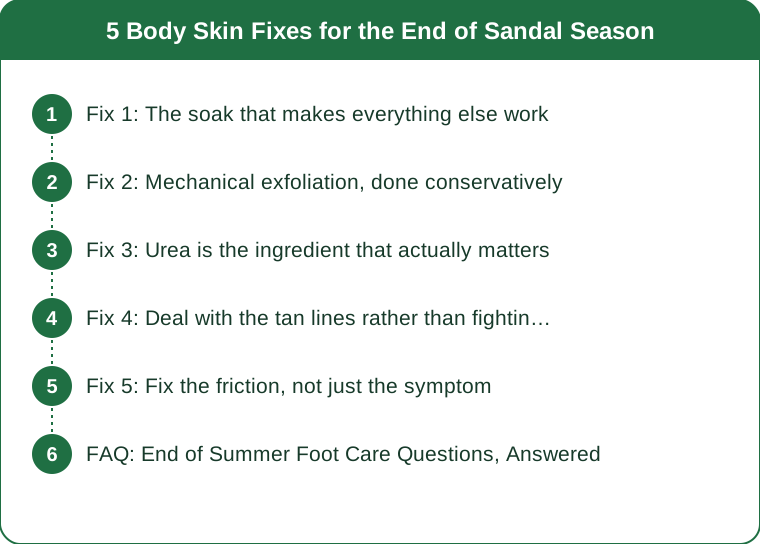
Fix 1: The soak that makes everything else work
Ten minutes in warm water before anything else, and skip the pumice until you have done it.
Dry callus resists exfoliation and tears rather than smoothing. Softened callus comes away evenly and with far less effort, which is the difference between improving your heels and irritating them.
Warm water is enough on its own. Epsom salts feel nice and a splash of oil helps, but neither is doing the essential work - the water is. Ten minutes is the useful minimum; twenty is better if you are watching something anyway.
Do this in the evening rather than the morning. Everything that follows works better overnight, and you do not want to put freshly softened feet straight into shoes.
Avoid very hot water and long daily soaking. Both strip the skin barrier, which is the underlying problem you are trying to fix, and dry feet respond badly to being dried further.
Fix 2: Mechanical exfoliation, done conservatively
After the soak, use a foot file or pumice on the thickened areas - heel, ball of the foot, and the outer edge of the big toe.
The rules that keep this from going wrong:
- Light pressure, more passes. Aggressive filing removes too much, and the skin responds by rebuilding thicker.
- Damp, not soaking wet. Pat dry first so the file has something to work against.
- Once or twice a week, not daily. Callus is a response to friction, and over-removal accelerates the rebuilding.
- Never on cracked or broken skin. If a heel fissure is open, that needs moisture and protection, not abrasion.
Skip metal callus shavers and blades. They remove too much too fast and the resulting skin is thinner than it should be for walking on.
A chemical option works well for people who dislike filing: a foot cream containing urea, salicylic acid, or lactic acid softens thickened skin gradually with no mechanical work at all.
Fix 3: Urea is the ingredient that actually matters
This is the single most effective change most people can make, and it is a specific ingredient rather than a category.
Urea does two things at once: it holds water in the skin and it breaks down the bonds between thickened surface cells. For heels, a cream in the range of ten to twenty-five percent urea is meaningfully more effective than a general body lotion.
How to use it: apply generously to clean, slightly damp feet at night, then put on cotton socks. The socks are not optional - they stop the cream transferring to the sheets and they keep it in contact with the skin for hours.
Expect visible improvement in about a week and substantial improvement in two to three. Deeply fissured heels take longer and may need the higher concentrations.
One practical note: urea creams can sting slightly on open cracks. If that happens, use a plain occlusive ointment on the cracks themselves for a few days first, and save the urea for the surrounding skin.

Fix 4: Deal with the tan lines rather than fighting them
Sandal tan lines are the other end-of-summer foot issue, and the honest answer is that they fade rather than being removed.
What helps:
Exfoliation. Tanned skin cells are surface cells, and regular gentle exfoliation of the whole foot and ankle speeds the fade meaningfully. This is one place where a body scrub in the shower is genuinely useful.
Even moisture. Hydrated skin sheds more evenly, so a hard line softens faster on a well-moisturised foot than a dry one.
Gradual self-tan on the pale sections, if you want them matched sooner. Apply to the lighter areas only, build slowly, and exfoliate first - self-tan on unexfoliated callus is how you get patchy orange heels.
What does not work: scrubbing hard at the line itself. It irritates the skin without shifting the pigment, and irritated skin can actually darken.
Realistically, a strong sandal line takes several weeks to blend. Starting the exfoliation now means it is gone before anyone sees your feet in a party shoe.
Fix 5: Fix the friction, not just the symptom
Callus is a response, so removing it without changing the cause means doing this again in three weeks.
Look at where the thickening actually is. The pattern tells you what is rubbing:
- Outer heel edge usually means a flat sandal with no back and a foot sliding sideways.
- Ball of the foot points to unsupported flat shoes with long walking days.
- Side of the big toe is often a strap position or a shoe slightly too narrow.
As feet move back into closed shoes for autumn, this is the natural moment to reset. A cushioned insole in the shoes you walk most in, socks that actually fit rather than bunching, and shoes that are not a half size too small will do more than any cream.
Also worth doing now: check the shoes you are about to bring out of storage. Last autumn’s boots with a worn-through insole are the direct cause of next month’s new callus, and it is easier to notice in August than in October.
FAQ: End of Summer Foot Care Questions, Answered
How long until cracked heels look normal?
With nightly urea cream and weekly gentle filing, most people see clear improvement in a week and near-normal skin in two to four. Deep fissures that bleed or hurt when walking take longer and are worth showing to a professional.
Is a professional pedicure worth it for this?
For stubborn thickening, one appointment can reset things much faster than home care, and then maintenance is easy. Choose somewhere that uses files rather than blades, and mention if you have any circulation or diabetes concerns, since foot care needs are different in those cases.
Why do my heels crack more in summer than winter?
Open-backed shoes let the heel fat pad spread sideways with each step, and dry skin has no flexibility to accommodate that, so it splits. Add barefoot time on hot ground and reduced moisture, and summer is peak season for it.
When should I see a doctor about my feet?
Cracks that bleed, any sign of infection, numbness or tingling, or foot problems alongside diabetes or circulation issues all warrant professional care rather than home treatment. This is general information, not medical advice.
TL;DR:
- Summer sandals cause thickening through friction and moisture loss, not neglect.
- Soak first. Dry callus tears; softened callus smooths evenly with far less effort.
- File lightly and weekly, never on cracked skin, and skip metal blades entirely.
- Urea cream at ten to twenty-five percent under cotton socks overnight is the highest-value step.
- Tan lines fade with exfoliation and moisture - do not scrub the line itself.
- Fix the friction source as shoes change over, or the callus rebuilds within weeks.
Two weeks of evening effort now, and your feet come out of socks next spring in far better shape than they went in.
Keep Reading
This article is for general informational and styling purposes only. Fit, sizing, and product availability may vary.