5 Body Skin Fixes for Exactly Where Your Kit Rubs
Quick Answer: Skin irritation under workout kit is a friction and moisture problem before it is a skincare problem, so the fixes that work are barrier products before training and gentle cleansing plus a lightweight moisturizer after - not aggressive scrubbing of the affected area. The five spots below each have a specific cause: the bra band traps sweat, the waistband adds pressure, strap lines rub at a fixed point, seams concentrate friction, and the back of the knee stays damp longest. Treat each one where it happens rather than treating your whole body the same way.
It is never your whole back. It is one line across it, in exactly the place the band sits, and it appeared the week you started training more.

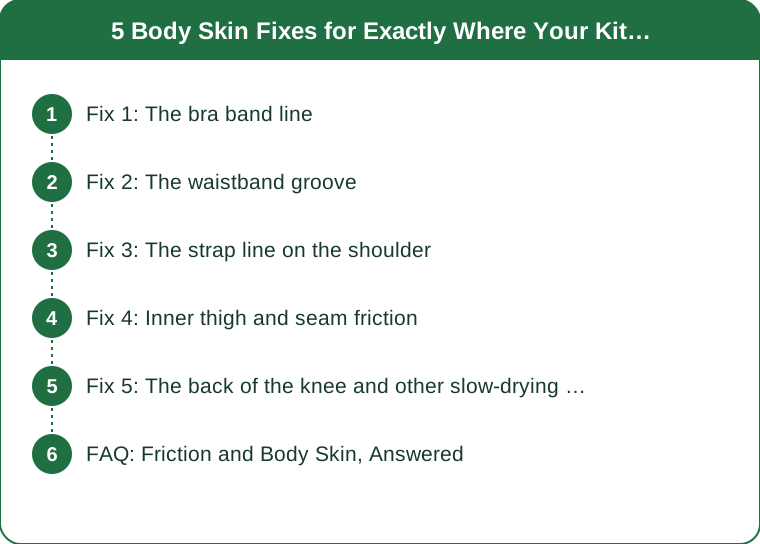
Fix 1: The bra band line
The problem is trapped moisture plus sustained pressure in one narrow strip. A band sits tight by design, sweat collects under it, and the skin stays damp and compressed for the length of the session and often long after.
Change out of the bra promptly - this is the single biggest fix. Staying in a damp sports bra through the coffee afterwards is when most of the damage happens, and it is entirely avoidable.
Rinse the area even if you cannot shower. A wipe along the band line and a proper dry removes the sweat residue that keeps irritating the skin between sessions.
Use a lightweight, non-occlusive moisturizer afterwards rather than a heavy balm. Thick products under a tight band can worsen congestion in an area already prone to it.
And check the band is the right size. A band riding up or digging in is a fit problem producing a skin symptom, and no product fixes that. If bumps under the band persist, are painful, or spread, see a clinician - this is general information, not medical advice.
Fix 2: The waistband groove
Pressure plus friction plus a seam is a demanding combination. High-waisted leggings sit across a soft area, and the roll-down at the top concentrates both.
Reach for a barrier product before training, not a treatment afterwards. An anti-chafe balm or a thin layer of a simple occlusive along the waistband line prevents the friction that you would otherwise be treating for the next three days.
Look for a wide, flat waistband rather than a folded one. Wide bands distribute pressure over more skin; folded or elasticated narrow ones concentrate it into a line.
Exfoliate gently and infrequently, if at all. Irritated skin under a waistband does not want a scrub - it wants less friction. A mild chemical exfoliant once or twice a week is a more sensible approach than anything physical.
And rotate which leggings you wear. Wearing the same pair four days a week means the same seam sits in the same millimetre of skin repeatedly, which is precisely how a persistent mark develops.
Fix 3: The strap line on the shoulder
Bag straps, bra straps, and hydration vests all rub at a fixed point that never moves. Unlike most friction, this one is constant rather than cyclical, so it produces a mark rather than a rub.
Widen the strap or add padding. A wider strap spreads the load, and a simple sleeve on a bag strap is a two-pound fix for something people try to treat with skincare for months.
Alternate shoulders deliberately. Most people carry on the same side without noticing. Swapping every other day gives the skin - and the trapezius underneath it - a recovery period.
Moisturize the shoulders and upper back, which almost everyone skips. These areas get sun exposure all summer and product almost never, and dry skin rubs more than well-moisturized skin.
And take strap marks that itch or flake seriously. Persistent itching, scaling, or a rash rather than simple redness suggests something other than friction - a fabric reaction or a skin condition - and is worth having looked at.
Fix 4: Inner thigh and seam friction
Seams concentrate friction into a line, and heat and moisture make it worse. This is why the same shorts are fine in October and a problem in a warm week.
Choose flat-lock or seamless construction where you can. Bulky seams sit against skin that is already moving against itself, and construction matters more than fabric here.
Apply a barrier balm before, not after. Anti-chafe products work by preventing the friction, which means they are a pre-workout step. Applying them to already-raw skin stings and does considerably less.
Longer shorts solve it outright. Biker-length shorts under a skirt or looser shorts remove the skin-on-skin contact entirely, which is why they became standard for so many runners.
Rinse and dry properly afterwards. Sweat left on the skin in a warm fold continues to irritate long after the session ends, and the drying is the step people skip.
Fix 5: The back of the knee and other slow-drying folds
Folds stay damp longest, and damp skin is fragile skin. The back of the knee, under the bust, and the crease of the elbow all hold moisture after everything else has dried.
Pat these areas dry deliberately after showering. Most people towel the large surfaces properly and let the folds air dry, which in a humid late-summer week can mean staying damp for a long time.
Use a light lotion rather than a heavy cream in folds. Occlusive products in a warm damp fold can worsen the problem they are meant to solve.
Change out of damp kit promptly - it applies here more than anywhere. Sitting in leggings that are dry at the thigh and damp behind the knee is extremely common after a session.
Watch for anything that looks like a rash rather than irritation. Redness with a defined edge, itching, a smell, or skin that is broken rather than simply red suggests a fungal or bacterial issue rather than friction, and those need appropriate treatment rather than moisturizer. This is general information, not medical advice - see a clinician or pharmacist if it does not settle within a week or two.
And use the season. As the humidity drops over the next few weeks, most of these friction points ease on their own - which makes now the right time to fix the fit and fabric issues before the long-sleeve, indoor-heating season introduces a different set.

FAQ: Friction and Body Skin, Answered
Why do I get bumps where my sports bra band sits?
Trapped sweat and sustained pressure in a narrow strip. The fix is changing out of a damp bra promptly, rinsing and drying the band line, and using a lightweight rather than heavy moisturizer - plus checking the band size, since a poor fit produces a skin symptom no product solves.
How do I stop chafing from leggings?
Apply a barrier balm before training rather than treating afterwards, choose flat-lock or seamless construction, and rotate which pairs you wear so the same seam is not sitting in the same place every day.
Should I exfoliate areas where my kit rubs?
Gently and rarely, if at all. Irritated skin from friction does not need a scrub - it needs less friction. A mild chemical exfoliant once or twice a week is more sensible than anything physical.
When is it more than friction?
If there is itching, flaking, a defined rash edge, a smell, or broken skin rather than simple redness, it may be a fabric reaction or a fungal or bacterial issue. Those need proper treatment - see a clinician or pharmacist if it has not settled in a week or two.
TL;DR:
- Irritation under kit is a friction and moisture problem first, so barrier products before training beat treatments afterwards.
- Change out of damp kit promptly and dry the slow-drying folds deliberately - that alone fixes a large share of it.
- Widen or pad straps, alternate shoulders, and choose wide flat waistbands and flat-lock seams over narrow, folded, or bulky ones.
- Use lightweight moisturizers in warm compressed areas rather than heavy balms, and go easy on exfoliation.
- Itching, flaking, a defined rash edge, or broken skin is not friction - get that assessed.
Five spots, five specific causes. Fix the fit and the fabric now, before the indoor-heating season starts a different set of problems.
See It in Motion
Seen here: UPF 50+ Short Sleeve Rashguard Swim Shirt — shop it on bubblelime.com
Keep Reading
This article is for general informational and styling purposes only. Fit, sizing, and product availability may vary.