5 Body-Skin Steps for the Week You Go Back to Long Sleeves
Quick Answer: Cut shower temperature, switch from a foaming wash to a cream cleanser, exfoliate chemically rather than physically once or twice a week, moisturise on damp skin within three minutes, and let the first week of covered skin be a low-friction one. Sun-damaged skin plus dry indoor air plus knitwear is the exact combination that produces itchy arms in October.
The first cool week always brings the same surprise. You put on a jumper for the first time in months and by lunchtime your forearms are itching and your upper arms have gone bumpy. Nothing changed about your skin overnight - it has been quietly compromised all summer, and fabric is simply the first thing to reveal it.

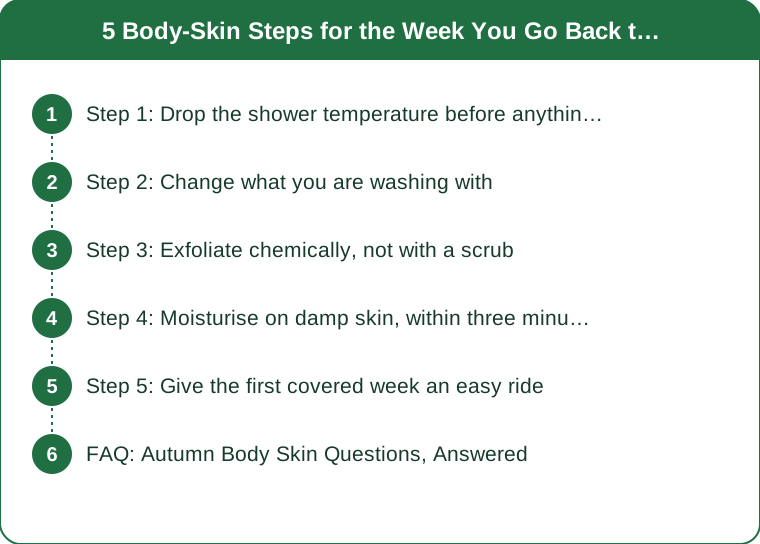
Step 1: Drop the shower temperature before anything else
This is the highest-impact change and the one people resist most, because a hot shower on a cool morning is genuinely lovely.
Hot water strips the skin’s lipid barrier - the layer of fats holding moisture in. Skin that already lost barrier integrity to UV, salt, and chlorine over the summer has less to lose, so the effect is amplified. A ten-minute hot shower can leave skin drier than not showering at all.
Aim for warm rather than hot, and keep it under about ten minutes. The practical test: your skin should not be pink when you get out.
If you are not willing to give up the heat, at least make the last thirty seconds cooler and moisturise immediately afterwards. That partial version captures a meaningful share of the benefit without requiring you to be a better person than you are.
Step 2: Change what you are washing with
Summer body washes are usually built around foam and fragrance - they cut through sunscreen and sweat, which is what you needed in July. In September they are removing oils you need.
Switch to a cream or oil-based cleanser, ideally fragrance-free. Look for a low-foaming formula; the lather is produced by surfactants, and heavy lathering generally means heavier stripping.
Wash less of yourself, too. Underarms, groin, feet, and anywhere that got sweaty need soap. Your forearms and shins mostly need water. This sounds like an odd thing to be told and it is one of the more effective changes available, particularly for people who get dry, itchy lower legs every autumn.
And retire the loofah. A nylon puff or a rough loofah does mechanical damage to already-fragile skin, and both are reliably unpleasant reservoirs of bacteria. A hand or a soft cloth is enough.
Step 3: Exfoliate chemically, not with a scrub
After a summer of sun exposure, the outer layer of skin is thicker and more uneven, which is what produces the dull, rough texture on upper arms and thighs. It needs exfoliating - just not by being sanded.
Chemical exfoliation with an alpha hydroxy acid (glycolic or lactic) or a beta hydroxy acid (salicylic) dissolves the bonds between dead cells rather than scraping them off. Lactic acid is the gentlest and also mildly hydrating, which makes it the best starting point for autumn.
Use it once or twice a week, not daily. More is not better, and over-exfoliated skin looks tight, shiny, and reactive - and stings when you moisturise.
For keratosis pilaris - the small rough bumps on the backs of the upper arms - salicylic acid or urea preparations tend to work better than AHAs, applied consistently a few times a week. It is a genetic condition, so the goal is management rather than cure, and it typically worsens in cooler months. Expect improvement over four to six weeks, not overnight.
Always moisturise afterwards, and be aware acids increase sun sensitivity - keep using sunscreen on anything still exposed.

Step 4: Moisturise on damp skin, within three minutes
The timing matters more than the product. Applying moisturiser to skin that is still damp traps the water that is already there; applying it twenty minutes later, to dry skin, mostly puts a layer on top of a problem.
Pat dry rather than rubbing, leave the skin slightly damp, and apply within about three minutes.
What to look for, in order of how much difference it makes:
- Humectants - glycerin, urea, hyaluronic acid - draw water into the skin.
- Emollients - squalane, ceramides, fatty alcohols - smooth and repair the barrier.
- Occlusives - petrolatum, shea, dimethicone - seal it in.
A good autumn body cream has all three. Summer lotions are usually humectant-heavy and light on occlusives, which is why the bottle that worked in July suddenly seems to do nothing.
Thicker for the evening, lighter for the morning is a reasonable rule if you dislike the feeling of cream under clothes. And ceramide-containing creams are worth the slight extra cost for anyone whose skin gets genuinely itchy under knitwear.
Step 5: Give the first covered week an easy ride
Fabric is the variable nobody accounts for. Skin that has been bare for three months goes straight into eight hours of friction against wool, and the reaction gets blamed on the weather.
For the first week or two:
- Wear a fine cotton or silk layer under wool. Wool against compromised skin is a classic trigger for itching, and a base layer solves it entirely.
- Check the laundry detergent. Residue from a heavily fragranced detergent sits in the fabric and against your skin all day. Rinsing on an extra cycle is a free test.
- Watch tight cuffs and waistbands - friction points show up first.
- Ease off shaving for a few days if the area is already reactive, and shave in the evening rather than before a day in sleeves.
If a rash is spreading, weeping, painful, or comes with swelling, that is not dry skin and needs a doctor or pharmacist rather than more moisturiser. Persistent itching without a visible rash is also worth mentioning to a GP.
This is general information, not medical advice.

FAQ: Autumn Body Skin Questions, Answered
Why does my skin itch when I start wearing long sleeves?
Usually a combination of a summer-weakened barrier, drier indoor air, and friction from wool. A cotton base layer plus a ceramide body cream fixes most cases within a week.
How often should I exfoliate my body in autumn?
Once or twice a week with a chemical exfoliant. Daily scrubbing makes autumn dryness worse, not better.
Should I still use SPF on my body in autumn?
On anything still exposed, yes - especially if you are using acids, which increase sun sensitivity. UV does not stop being relevant because the temperature dropped.
TL;DR:
- Cooler, shorter showers and a cream cleanser protect the barrier your summer already damaged.
- Chemical exfoliation once or twice weekly beats scrubbing, and salicylic or urea works best for arm bumps.
- Moisturise on damp skin within three minutes, using a cream with humectants, emollients, and occlusives.
- Give the first covered week a cotton base layer and a fragrance-free detergent.
The switch back to sleeves exposes what the summer did rather than causing anything new. Two weeks of this and the jumper stops being an event.
Keep Reading
This article is for general informational and styling purposes only. Fit, sizing, and product availability may vary.