5 Body Skin Fixes for the End of Summer
Quick Answer: After a summer of sun, chlorine, salt and sweat, body skin usually needs five things in this order: rehydration, gentle rather than aggressive exfoliation, barrier repair, targeted attention to the areas that took the most exposure, and continued sun protection. The most common mistake is jumping straight to a strong scrub, which makes a compromised barrier worse.
By late August most people’s body skin is a bit rougher, a bit drier, and more uneven than it was in June. That is a predictable result of the season, and the repair is more straightforward than the product aisle suggests.

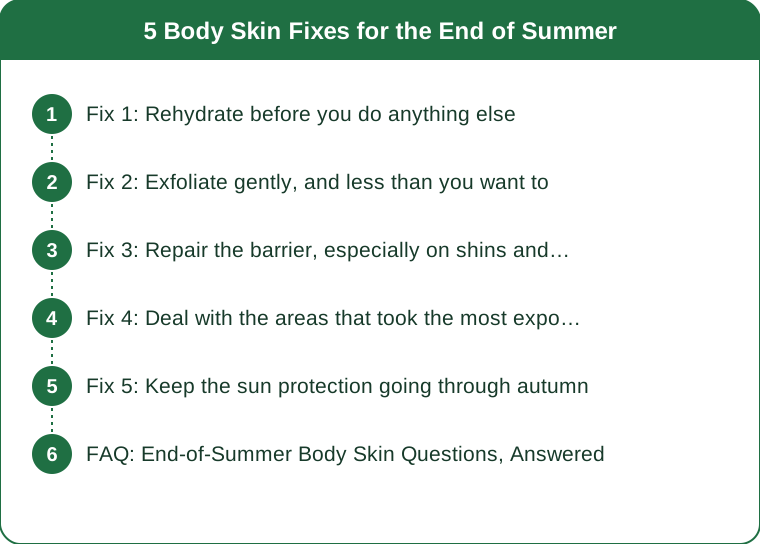
Fix 1: Rehydrate before you do anything else
Why this comes first: a summer of sun exposure, chlorinated water, salt water, and air conditioning leaves skin dehydrated and its barrier compromised. Applying an active or an exfoliant to a compromised barrier makes it worse, not better.
What dehydrated body skin looks like: tight after showering, dull rather than red, fine flaking especially on shins and forearms, and skincare that stings when it did not in June.
The most effective single change is when you moisturise, not what. Applying to damp skin within about three minutes of getting out of the shower traps water that is already there. The same product on dry skin an hour later does noticeably less.
What to look for: humectants that draw water in (glycerin, hyaluronic acid, urea), plus an occlusive element to hold it (squalane, shea, dimethicone). Body lotions that are mostly water and fragrance will not do this job.
Shower temperature matters more than people accept. Hot water strips lipids from the skin barrier. Lukewarm, and shorter, makes a genuine difference over two weeks.
Give this stage a full week on its own before adding anything active. That week is what makes everything after it work.
Fix 2: Exfoliate gently, and less than you want to
The instinct after summer is to scrub. Skin feels rough, so aggressive physical exfoliation seems logical. On a compromised barrier it causes irritation and more flaking, which reads as needing more scrubbing, and the cycle continues.
Chemical beats physical for body skin. A lotion with lactic acid or a body wash with salicylic acid exfoliates more evenly and with far less mechanical disruption than a sugar scrub.
Lactic acid is the gentler choice, and it is also a humectant, so it hydrates as it exfoliates - which is exactly what post-summer skin needs.
Salicylic acid is oil-soluble and better suited to bumpy texture on the backs of the arms, chest, and back.
Frequency: twice weekly is enough for most people. Daily use of an acid on body skin is a common cause of persistent irritation people then attribute to something else.
Where to be careful: anywhere that got significant sun. Recently sun-exposed skin is more reactive, and acids on it will sting. Wait until skin has settled.
If you prefer physical exfoliation: a soft washcloth or a konjac sponge with your normal wash, twice weekly. That is genuinely sufficient, and gentler than any scrub.
Fix 3: Repair the barrier, especially on shins and forearms
Why these two areas specifically: shins and forearms have fewer oil glands than most of the body and take a disproportionate share of sun exposure. They are reliably the first places to show a rough, dry, slightly scaly texture at the end of summer.
What barrier repair actually needs: ceramides, cholesterol, and fatty acids - the components of the skin’s own lipid matrix. Products listing ceramides high in the ingredient list are doing real work here.
The layering approach that works: a humectant-heavy lotion on damp skin, then a richer occlusive layer over the driest patches only. Two products, applied in the right order, outperform one expensive one.
The overnight version for badly affected areas: thick balm on the shins, then long cotton pyjama bottoms or socks. Occlusion overnight is the fastest way to turn rough skin around, and it takes about three nights.
How long it takes: the skin barrier typically needs two to four weeks of consistent care to recover meaningfully. Nothing produces a genuine repair overnight, whatever the packaging suggests.
What derails it: long hot showers, harsh soaps, and skipping days. Consistency matters more here than product cost - a basic ceramide lotion used daily beats an expensive one used twice a week.

Fix 4: Deal with the areas that took the most exposure
Chest and shoulders. Usually the most sun-exposed body areas and where uneven tone shows first. Gentle consistency over months is what helps - niacinamide is a well-tolerated option for body use. Anything strong on this area needs a professional’s input.
Backs of the hands. Frequently the most sun-exposed and least protected skin on the body, and often neglected because it is not visible to the person it belongs to. Hand cream with SPF, kept where you will actually use it, is the simplest fix available.
Feet. A summer of sandals produces thickened, cracked heels. Urea-based creams (10-25%) work considerably better than plain moisturiser here because urea both hydrates and softens keratin. Apply at night with socks over the top.
Backs of the arms. The bumpy texture that many people notice is extremely common, often improves in summer with sun exposure, and returns in autumn. Gentle salicylic acid and consistent moisturising manage it; nothing eliminates it permanently.
Chlorine-exposed skin. If you have swum regularly, rinse immediately after and moisturise the same day. Chlorine’s drying effect is cumulative across a season rather than dramatic on any one day.
Anything that has changed - a mole that has altered in size, shape, or colour, a patch that will not heal, or new pigmentation that appeared quickly - needs a doctor, not a skincare routine. This is general information, not medical advice.
Fix 5: Keep the sun protection going through autumn
This is the fix everyone stops doing, and it is the one that determines what next summer starts from.
UVA levels remain meaningful outside the peak summer months and penetrate cloud and window glass. The daily incidental exposure that accumulates - commuting, walking, sitting near a window - does not stop when the beach season does.
The realistic version for body skin in autumn: you do not need full-body SPF daily in October. Hands, forearms, chest, and neck are the areas with continued daily exposure and they are the ones worth protecting.
The practical route to compliance: a body lotion or hand cream that includes SPF, so it happens as part of a routine that already exists. A separate step you have to remember is a step that gets skipped by mid-September.
Why this belongs in a repair article: everything in fixes 1 through 4 is undone by continued unprotected exposure. Barrier repair and tone work happen slowly; a sunny weekend without protection sets both back.
The honest timeline: consistent body skincare shows a texture change in two to four weeks and a tone change over months. Anyone promising faster is selling something. Setting the routine up now means arriving at next summer from a better starting point rather than repeating this repair job.
One thing worth doing this month: check your sunscreen expiry dates before they go into a cupboard for eight months. Most people discover in June that theirs expired the previous autumn.

FAQ: End-of-Summer Body Skin Questions, Answered
How long until I see a difference?
Texture usually improves within two to four weeks of consistent moisturising. Tone changes take considerably longer - months rather than weeks.
Can I use my face products on my body?
You can, but body skin is thicker and body areas are much larger, so it gets expensive fast. Body-specific formulations are generally better value for the same active.
Is a body scrub ever the right choice?
On genuinely thickened skin like heels, yes. On post-summer arms and legs with a compromised barrier, a chemical exfoliant twice weekly is gentler and more effective.
Should I keep using SPF on my body in winter?
On areas with daily exposure - hands, face, neck - yes. Full-body application is less necessary when you are covered, which makes the exposed areas the ones to prioritise.
TL;DR:
- Rehydrate first and give it a full week before adding anything active
- Chemical exfoliation twice weekly beats scrubbing a compromised barrier
- Ceramide-based repair on shins and forearms, with overnight occlusion for the worst patches
- Target chest, hands, feet and backs of arms specifically - they took the most exposure
- Keep SPF going on hands, forearms, chest and neck through autumn or the repair gets undone
Check your sunscreen expiry dates before they go in a cupboard for eight months. This is general information, not medical advice - anything that has changed on your skin needs a doctor.
Keep Reading
This article is for general informational and styling purposes only. Fit, sizing, and product availability may vary.