5 Body Skin Adjustments to Make in the First Cool Weeks
Quick Answer: Skin barrier problems in autumn start weeks before it feels cold, because humidity drops before temperature does. Make the changes now rather than in November: switch to a cream instead of a lotion, apply within three minutes of showering, drop the water temperature, cut back exfoliation to once or twice a week, and keep using sunscreen. Five specific adjustments below.
The tightness you feel after a shower in mid-September is the first signal. Acting on it now is much easier than repairing a properly compromised barrier in December.

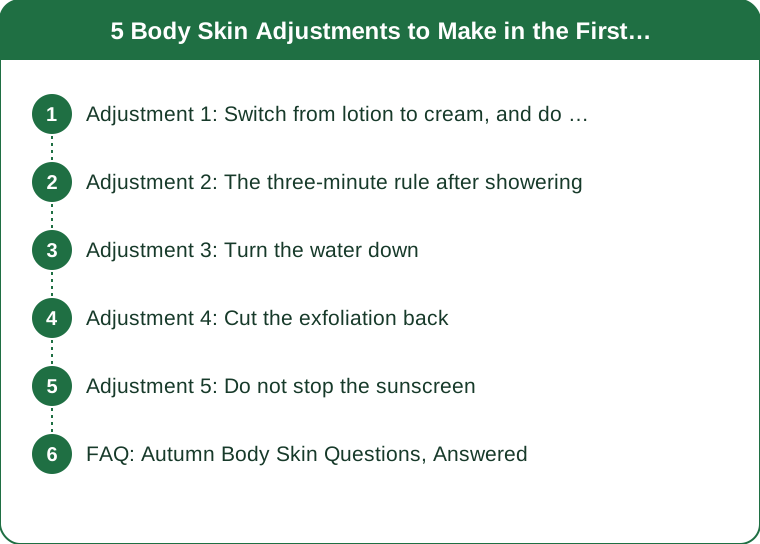
Adjustment 1: Switch from lotion to cream, and do it now
The single highest-value change on this list, and the one people delay longest.
The difference is water content. A lotion is mostly water with some oil, which is why it absorbs fast and feels light in summer. A cream has a higher oil-to-water ratio, so it leaves more occupying material on the skin surface. An ointment or balm is higher still, which is what you want on hands, elbows, and heels.
What to look for on the label:
- Humectants - glycerin, hyaluronic acid, urea. These draw water into the outer layer
- Emollients - squalane, ceramides, fatty alcohols. These fill the gaps between skin cells and make skin feel smooth
- Occlusives - petrolatum, dimethicone, shea butter. These slow water loss from the surface
A good autumn body cream has all three. Most summer lotions are heavy on humectants and light on the other two, which is exactly wrong for falling humidity - a humectant with nothing sealing it can pull moisture out of the skin in dry air rather than into it.
Why now rather than November: indoor humidity is already dropping as heating systems start cycling on overnight. Barrier damage accumulates, and skin that has been quietly drying out since September is much harder to settle than skin that was supported from the start.
Adjustment 2: The three-minute rule after showering
The most effective free change, and almost nobody does it.
The rule: apply moisturiser within about three minutes of getting out of the shower, onto skin that is still slightly damp.
Why it works: after a shower your outer skin layer is temporarily saturated with water. Moisturiser applied then traps that water in. Applied twenty minutes later, onto fully dry skin, it is sealing in whatever is left - which after evaporation in dry air is considerably less.
How to actually make it happen:
- Pat dry rather than rubbing, and leave the skin faintly damp
- Keep the cream in the bathroom, not the bedroom
- Apply before you get dressed, not after. This is the whole logistical problem and it is why the habit fails
The order that works: shower, pat, apply to legs and arms first because they dry fastest, then torso, then feet last.
How much: more than you think. Most people use a fraction of what covers the body properly. If it absorbs instantly with no residue at all, you probably underapplied.
Once or twice a day? Once, done properly after a shower, beats twice done carelessly. If your skin is genuinely dry, add a second application to hands, shins, and forearms in the evening - those three areas are where autumn dryness shows first.
Adjustment 3: Turn the water down
Uncomfortable advice in cool weather, and the reason a lot of autumn dryness happens.
Hot water strips the skin’s own lipids - the fats between skin cells that hold the barrier together. The hotter and longer the shower, the more of that gets removed, and it takes hours to rebuild.
The specific target: warm rather than hot, and 5-10 minutes rather than 20. If your skin is pink when you get out, the water was too hot.
The seasonal trap: as mornings get colder, showers get hotter and longer, and this happens gradually enough that nobody notices they have changed. By November many people are taking a considerably hotter shower than they were in August, at exactly the point when the air is drier.
Two more shower changes worth making:
- Switch the body wash. Foaming, high-lather washes are more stripping. Look for a cream wash, a syndet bar, or something labelled for sensitive skin. Save the strongly foaming one for areas that need it
- Skip the daily full-body soap. Most people only need soap on the underarms, groin, feet, and anywhere actually dirty. Running water is sufficient for arms, legs, and back on most days, and this alone resolves mild autumn dryness for a lot of people
On baths: a warm bath is fine, and a long hot one is one of the more drying things you can do. If you take baths, keep them under 15 minutes and moisturise immediately after.

Adjustment 4: Cut the exfoliation back
Summer routines usually involve more exfoliation than autumn skin can tolerate, and this is where people actively make things worse.
Why summer had you exfoliating more: sunscreen, sweat, self-tanner, sand, and more visible skin. Two or three times a week was reasonable.
Why that fails now: exfoliation removes the outermost layer, which is also the layer doing most of the water-retention work. In humid air, it regenerates fast and you barely notice. In dry air, you are removing protection faster than it rebuilds.
The autumn schedule:
- Chemical exfoliants (lactic acid, glycolic acid, urea): once or twice a week maximum, and lactic acid is the gentler choice for body skin
- Physical scrubs: once a week at most, and gentle. Harsh sugar or salt scrubs are best left in summer
- Dry brushing: light pressure, and stop entirely if skin feels tight afterward
The signs you are overdoing it: stinging when you apply moisturiser, skin that feels tight rather than smooth after exfoliating, small rough patches that get worse rather than better, or redness that lasts more than an hour.
The exception: keratosis pilaris - the small rough bumps on upper arms and thighs - usually needs consistent gentle chemical exfoliation year-round, and often gets worse in autumn. Urea or lactic acid, two or three times a week, plus heavy moisturising is the standard approach, and it works slowly. Expect six to eight weeks before a clear change, not two.
If you have eczema, psoriasis, or a persistent rash, get it assessed rather than working through a general routine - autumn is when these commonly flare and the treatment differs. This is general information, not medical advice.
Adjustment 5: Do not stop the sunscreen
The most-skipped step of the season, and the reasoning behind skipping it is wrong.
UVA does not drop much with the seasons or the temperature. It penetrates cloud and glass, and it is the wavelength most associated with photoaging and pigment changes. The visible summer signal - heat and burning, which come largely from UVB - reduces significantly in autumn, so the reminder disappears while a substantial part of the exposure does not.
Where it matters most in autumn:
- Hands. The most sun-exposed and least protected part of the body year-round, and where cumulative damage shows earliest. A hand cream with SPF solves two problems at once
- Chest and neck, which stay exposed with autumn necklines
- Face, obviously, but this is a body skin article and the neck and chest are the areas people actually forget
If you are treating pigmentation or post-inflammatory marks from summer, sunscreen is not optional. Those marks fade over months, and UV exposure during that window slows the fading substantially. This is the most common reason summer marks are still visible the following spring.
A realistic autumn approach: SPF on the face, neck, chest, and backs of the hands daily. Full-body application only when you will be outside for an extended period. Nobody is applying body sunscreen daily in October and pretending otherwise sets up a routine that gets abandoned entirely.
One thing worth doing this month: check any spot that changed over the summer. New, changing, or unusual marks should be looked at by a doctor, and the end of the sun season is a sensible annual prompt.

FAQ: Autumn Body Skin Questions, Answered
When should I switch to a heavier moisturiser?
When you first notice tightness after a shower, which is usually several weeks before it feels genuinely cold. Indoor humidity falls before outdoor temperature really drops.
Is body oil as good as cream?
Oil is an excellent occlusive but contains no water. It works best applied over damp skin or on top of a cream, not instead of one on dry skin.
Why are my shins the driest part of me?
Shins have less oil gland activity and less underlying fat than most of the body, so they lose water fastest. They usually need a heavier product and more frequent application than the rest of you.
Do humidifiers actually help?
Yes, when indoor heating is running. Keeping bedroom humidity around 40-50% overnight makes a noticeable difference to skin that feels tight in the morning.
TL;DR:
- Switch from lotion to a cream with humectants, emollients, and occlusives - now, not in November
- Apply within three minutes of showering, onto damp skin, before getting dressed
- Turn the water down and cut the shower to 5-10 minutes; skip full-body soap most days
- Reduce exfoliation to once or twice a week as humidity drops
- Keep sunscreen on hands, neck, and chest - UVA does not take the autumn off
Humidity drops weeks before temperature does, which is why September skin gets tight while it still feels like summer. Make the switch on the first tight morning and December is a lot easier.
Keep Reading
This article is for general informational and styling purposes only. Fit, sizing, and product availability may vary.