Building a Body Skincare Routine That Won't Trigger Sensitive Skin
Quick Answer: Sensitive skin does better with fewer, simpler body products introduced one at a time rather than a full routine switched all at once, since reactive skin often can’t tell you which specific ingredient caused a flare-up if several are introduced together.
You’ve reacted to a new body product before and now you’re gun-shy about trying anything new — which is a reasonable instinct, but it doesn’t mean sensitive skin has to stay stuck with the bare minimum.

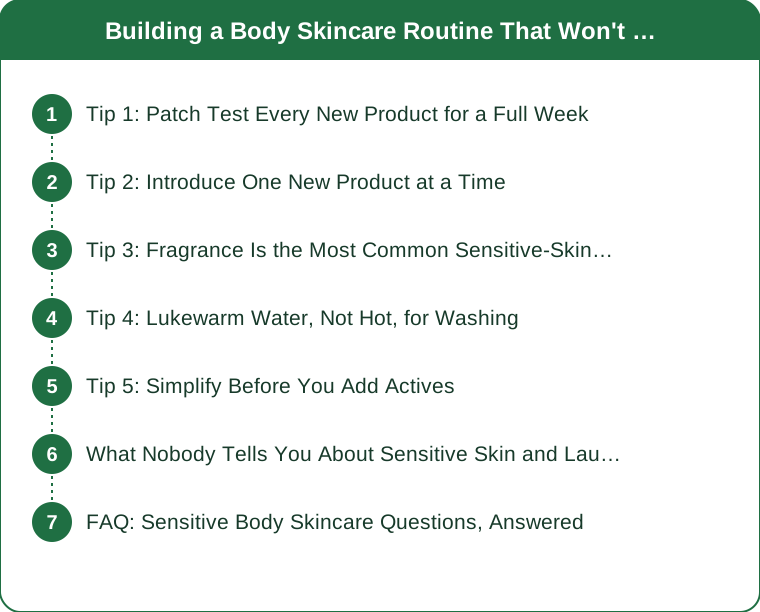
Tip 1: Patch Test Every New Product for a Full Week
Apply a small amount to the inner forearm daily for 5-7 days before using it on larger body areas — many reactions from body products take several days of repeated exposure to show up, not just one application.
Tip 2: Introduce One New Product at a Time
Adding a new body wash, lotion, and exfoliant simultaneously makes it nearly impossible to identify which one caused a reaction if something goes wrong. Space new product introductions by at least two weeks so any flare-up has an obvious single cause.
Tip 3: Fragrance Is the Most Common Sensitive-Skin Trigger
Both synthetic and ‘natural’ fragrance compounds are frequent irritants for reactive skin — fragrance-free (not just ‘unscented,’ which can still contain masking fragrance) is the safest starting point for body wash and lotion alike.

Tip 4: Lukewarm Water, Not Hot, for Washing
Hot water strips the skin’s natural oil barrier faster than warm or lukewarm water does, which for sensitive skin often means more post-shower tightness, redness, and itching regardless of which products you use afterward.
Tip 5: Simplify Before You Add Actives
Body-safe actives like retinol or acids can eventually be layered in, but only once a simple, fragrance-free cleanser-and-moisturizer routine has been tolerated well for several weeks — adding actives to already-reactive skin usually backfires.
What Nobody Tells You About Sensitive Skin and Laundry Detergent
Detergent residue left in towels, sheets, and clothing is a frequently overlooked trigger that has nothing to do with your skincare products at all — switching to a fragrance-free, dye-free detergent solves reactions that seemed skincare-related but weren’t.

FAQ: Sensitive Body Skincare Questions, Answered
Are natural or organic body products automatically safer for sensitive skin?
Not necessarily — plant-derived ingredients like essential oils can be just as irritating as synthetic fragrance, so ‘natural’ isn’t a reliable proxy for gentle.
How do I know if a reaction is an allergy versus general irritation?
True allergic reactions typically involve hives, swelling, or intense itching and may need a dermatologist’s evaluation, while general irritation tends to be milder redness and dryness that improves once the product is stopped.
Can sensitive skin still use body exfoliants?
Yes, but a gentle, low-frequency approach (once weekly, with a soft washcloth or mild chemical exfoliant rather than a harsh physical scrub) is usually better tolerated.
TL;DR:
- Patch test every new body product for a full week before wider use
- Introduce one product at a time so reactions are traceable
- Fragrance-free (not just unscented) is the safest default
- Check laundry detergent if reactions seem product-related but persist
This is general information, not medical advice — if reactions are severe or persistent, a dermatologist can help identify the specific trigger faster than trial and error alone.
Keep Reading
This article is for general informational and styling purposes only. Fit, sizing, and product availability may vary.