The Body Skincare Layering Mistakes That Waste Half Your Product
Facial skincare gets endless attention paid to layering order, and body skincare gets almost none, even though the same principle applies just as strongly — applying a body lotion, oil, or treatment in the wrong sequence can genuinely waste much of its effectiveness. Here is the correct order and reasoning, and the specific pairing mistakes worth avoiding.

Why Layering Order Matters as Much on the Body as the Face
The underlying logic: the thinner-formulas-need-to-absorb-before-thicker-ones (the same absorption-rate hierarchy that governs facial skincare applying directly to body products — thin serums and treatments need clean, unobstructed skin contact before a thick cream seals it off — the physics-doesnt-change-just-because-its-body-not-face), the the-body-skin-barrier-works-the-same-way (the body’s skin barrier following the identical basic biology as facial skin, just often treated with less precision in product routines — the same-biology-less-attention), the the-larger-surface-area-means-layering-mistakes-compound (the body’s much larger surface area meaning a layering mistake affects far more skin at once than the same mistake on a face — the mistake-scale-is-bigger-on-the-body), the the-active-ingredients-need-direct-contact-to-work (the treatment actives like retinoids or exfoliating acids, relevant to body-specific concerns like the keratosis-pilaris-arm-bumps and bacne-back-acne-guide logic, needing to actually reach skin rather than being blocked by an already-applied barrier layer — the actives-blocked-by-wrong-order-simply-dont-work), the the-oil-before-cream-versus-after-changes-the-outcome (the water-based versus oil-based formulas needing a specific sequencing — generally water-based and treatment products before oil-based sealants — to actually function as intended — the sequence-determines-whether-ingredients-can-do-their-job), and the reframe (the body-skincare layering question as a real efficacy issue with real product waste at stake, not a nitpicky facial-skincare-only concern).

The Correct Sequence and the Reasoning Behind It
The actual order: the exfoliate-first-on-a-separate-step (the physical or chemical exfoliation happening before any leave-on product, clearing the way for everything applied afterward to actually reach skin, from the body-exfoliation-guide logic — the clear-the-surface-before-adding-anything), the the-treatment-serums-or-actives-next-on-damp-skin (the targeted treatments — for keratosis pilaris, body acne, or dryness — applied to slightly damp skin right after showering, when absorption is generally most efficient — the treatments-need-first-access-to-skin), the the-lightweight-lotion-or-humectant-layer (the a lighter, water-based lotion layer next, addressing hydration before the heavier sealing step — the hydration-before-sealing-not-after), the the-oil-or-heavy-cream-last-to-seal (the thicker oils or creams applied last specifically to lock in everything underneath, per the body-lotion-timing-science logic, rather than first where they’d block absorption of everything else — the sealants-go-last-by-definition), the the-spf-or-daytime-specific-products-as-the-final-outer-layer (the any daytime-specific product, when relevant to exposed body skin, applied as the truly final step — the final-step-protects-everything-applied-underneath), and the frame (the correct sequence as exfoliate, treat, hydrate, seal, and protect — thinnest and most targeted to thickest and most protective, in that order, every time).
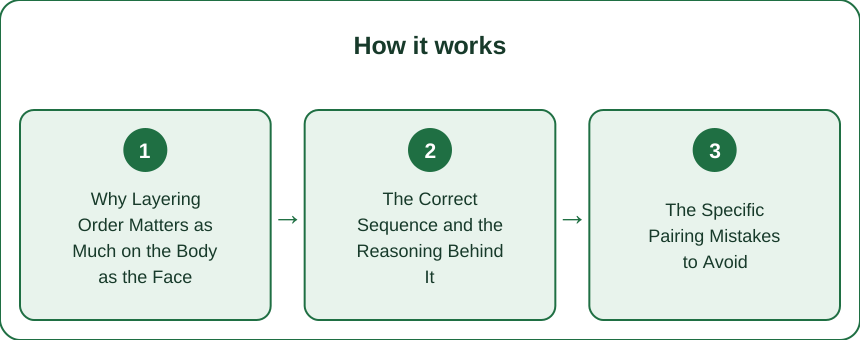
The Specific Pairing Mistakes to Avoid
What to stop doing: the applying-heavy-body-butter-before-a-treatment-serum (the a rich, thick body butter applied first physically blocking a subsequently applied treatment product from ever reaching skin — the the-most-common-and-most-wasteful-mistake), the the-mixing-active-exfoliants-with-certain-other-actives-same-session (the layering an exfoliating acid with another strong active in the same routine risking irritation rather than added benefit, a body-skin version of a well-known facial-skincare caution — the more-actives-isnt-automatically-better), the the-applying-oil-then-lotion-in-that-order (the oil applied before a water-based lotion preventing the lotion from absorbing properly, the reverse of the correct sequence — the reversed-order-is-a-specific-common-error), the the-skipping-damp-skin-application-timing (the waiting until skin is fully dry to apply hydrating products, missing the efficient-absorption window right after showering — the timing-not-just-order-affects-efficacy), the the-using-too-many-products-without-a-clear-sequence-plan (the layering four or five different products without any actual sequencing logic, simply hoping more products means more benefit — the a-plan-beats-a-pile-of-products), and the frame (the mistakes to avoid as applying heavy products too early, combining strong actives carelessly, reversing the oil-lotion order, missing the damp-skin timing window, and layering too many products without a real sequence — fixing the order alone often makes an existing product routine noticeably more effective without buying anything new).
Body skincare layering follows the same absorption-rate logic as facial skincare, just scaled to a much larger surface area where a sequencing mistake affects far more skin at once — thin treatment products need direct, unobstructed contact with skin before a thick cream seals everything in, and applying them in the wrong order effectively wastes the treatment. The correct sequence is exfoliate first to clear the way, apply targeted treatments to slightly damp skin right after showering when absorption is most efficient, follow with a lighter water-based lotion for hydration, and seal everything with a heavier oil or cream last. The most common and most wasteful mistakes are applying a heavy body butter before a treatment serum, reversing the oil-then-lotion order, skipping the damp-skin timing window entirely, and layering several products with no real sequencing logic at all. Fixing the order alone often makes an existing routine noticeably more effective without buying a single new product.
Keep Reading
This article is for general informational and styling purposes only. Fit, sizing, and product availability may vary.