Why Your Body Skin Feels Rough No Matter What You Use — the Hard Water Answer
Quick Answer: Hard water leaves mineral deposits (mostly calcium and magnesium) on skin that block moisturizer absorption and can leave a filmy, rough residue. A quick rinse with a shower filter or a post-shower rinse-off routine fixes it faster than switching lotions ever will.
You’ve changed body washes three times this year. Nothing sticks — literally. Your skin still feels tight an hour after moisturizing, like the lotion sat on top instead of soaking in. Before buying a fourth product, check your water.

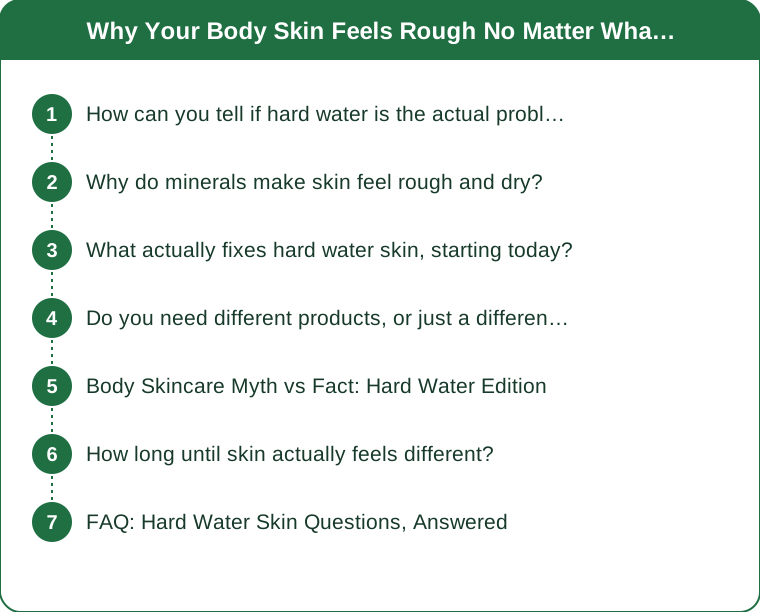
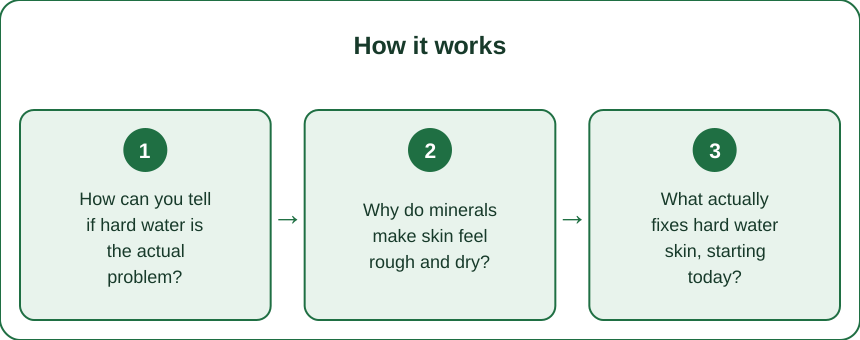
How can you tell if hard water is the actual problem?
Run a simple test: fill a clear glass with tap water, add a drop of dish soap, and shake. Hard water won’t foam much and turns cloudy instead. If that’s your result, your skin is dealing with the same mineral load every single shower.
Other tells: soap that won’t lather easily, a slight film left on shower glass or tile, and hair that feels coated or dull even right after washing — the same minerals sit on strands and skin alike.
Why do minerals make skin feel rough and dry?
Calcium and magnesium in hard water bind with soap and skincare ingredients to form a residue that sits on top of skin instead of rinsing clean. That residue does two things: it physically blocks some moisturizer absorption, and it can disrupt the skin barrier over repeated exposure.
The result feels like dryness, so the instinct is to add more lotion — but more product on top of mineral film just means more product that doesn’t absorb.
What actually fixes hard water skin, starting today?
1. Add a filtered showerhead. This is the single highest-impact fix — a basic KDF or vitamin C filter showerhead (under $40) removes a meaningful share of the mineral load at the source.
2. Do a final cool rinse. Finishing your shower with 15-20 seconds of cooler water helps rinse mineral residue rather than letting it dry onto skin as the water evaporates.
3. Apply moisturizer to damp, not dry, skin — within 3 minutes of stepping out, while pores are slightly open and before residue fully sets.

Do you need different products, or just a different routine?
You likely don’t need new products — you need a chelating or clarifying body wash occasionally (once or twice a week) to lift existing mineral buildup, plus the routine changes above for daily use.
Look for washes listing ingredients like EDTA or citric acid on the label — these bind to minerals and help rinse them away instead of letting them resettle on skin. Using a clarifying wash daily instead of occasionally can be too stripping for sensitive skin, so twice a week is the practical ceiling for most people.
Body Skincare Myth vs Fact: Hard Water Edition
Myth: Softer soap fixes hard water skin. Fact: Soap type matters less than rinse-off. Even a gentle cleanser leaves mineral residue behind in hard water — the fix is in the water treatment and rinse routine, not the cleanser formula alone.
Myth: Moisturizing more solves it. Fact: Piling on lotion over mineral film just wastes product. Damp-skin application and a filter matter more than lotion quantity.
Myth: Hard water only affects hair, not skin. Fact: The same calcium and magnesium deposits that dull hair sit on body skin too — it’s just less visible until skin starts feeling persistently tight or flaky.
How long until skin actually feels different?
Most people notice a difference within 7-10 days of adding a filtered showerhead and the damp-skin moisturizing habit — that’s roughly how long it takes existing residue to fully clear with regular gentle exfoliation and consistent rinsing.
If skin still feels rough after 3 weeks of both changes, layer in a weekly clarifying wash and consider testing your water hardness level directly with a home test kit — some regions run hard enough that a whole-house softener is the more permanent fix.
FAQ: Hard Water Skin Questions, Answered
Does hard water cause acne or just dryness?
Mostly dryness and rough texture, but the residue can also clog pores in acne-prone skin, especially on the back and chest where washes rinse less thoroughly. A filtered showerhead helps both issues.
Is a shower filter worth it for skin alone?
Yes, for most hard-water regions — it’s a one-time under-$40 fix that addresses the root cause rather than adding another product to a routine that isn’t absorbing.
Can hard water make eczema or sensitive skin worse?
Studies have linked hard water exposure to increased eczema flare risk in sensitive skin, likely through the same barrier-disruption mechanism. If you have diagnosed eczema, a filter is worth prioritizing over trying more products.
TL;DR:
- Test your water first: cloudy, low-foam soap test means hard water is likely your real issue
- Minerals bind with product residue and block absorption — that’s the “nothing sinks in” feeling
- Add a filtered showerhead, rinse cool at the end, and moisturize on damp skin within 3 minutes
- Give it 7-10 days before switching products again
Try the glass-and-soap test tonight — it takes 30 seconds and might save you a fourth bottle of lotion.
Keep Reading
This article is for general informational and styling purposes only. Fit, sizing, and product availability may vary.