5 Body Skin Fixes for the Week the Air Turns Dry
Quick Answer: Skin gets tight and flaky within days of the first cold snap because indoor heating drops humidity fast and cold air holds less moisture to begin with. The five highest-impact changes, in order: lower your shower temperature, moisturise within three minutes of getting out, switch from lotion to cream, add an occlusive at night, and stop exfoliating as often. Products matter less than timing and water temperature.
Nothing about your routine changed. The air did, and your skin noticed within about four days.
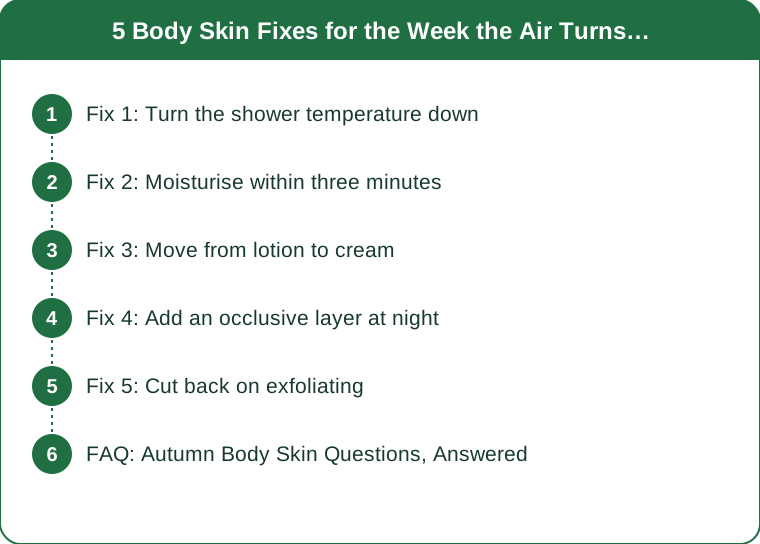
Fix 1: Turn the shower temperature down
The highest-impact change on this list, and the one people resist most.
Hot water strips the lipids that hold your skin barrier together. The outer layer of skin is a structure of cells held in a lipid matrix - ceramides, cholesterol, and fatty acids. Hot water and surfactants dissolve that matrix, which is why skin feels tight the moment you step out of a hot shower.
The fix is warm rather than hot, and shorter. Aim for a temperature that doesn’t turn your skin pink, and 5-10 minutes rather than 20. This single change does more for winter dryness than switching to a more expensive moisturiser, because you’re stopping the damage rather than repairing it afterwards.
The related swap: replace a foaming body wash with a cream or oil-based cleanser, and use it only where you actually need it - underarms, feet, groin. Most of your body doesn’t need soap every day, and lathering your arms and legs daily is a significant contributor to seasonal dryness.
What to expect: noticeably less tightness within about three days. This is the fastest-acting item here.
Fix 2: Moisturise within three minutes
Timing changes the result more than the product does, and it’s free.
Damp skin holds water that a moisturiser can seal in. Apply to dry skin twenty minutes after a shower and you’re mostly adding a layer on top of skin that has already lost the water. Apply to skin that’s still slightly damp and the moisturiser traps that water in the outer layer.
The window commonly cited is about three minutes - the period before evaporation has taken most of the surface moisture. Pat with a towel rather than rubbing dry, then apply straight away.
The practical version: keep the moisturiser where you’ll actually reach it - on the counter next to the shower, not in a cupboard down the hall. The number one reason people skip this step is friction, not disagreement with the advice.
Apply more than feels necessary. Most people use a fraction of what would be effective on limbs. Arms and legs have a large surface area, and a coin-sized amount is not covering it.
One extra: the same principle applies to hands after every wash, which is where autumn dryness usually shows first and most visibly.
Fix 3: Move from lotion to cream
Same category, meaningfully different formulation, and autumn is when the difference starts mattering.
The distinction is water content. Lotions are mostly water with some oil, which makes them light, fast-absorbing, and pleasant in summer. Creams have a higher oil-to-water ratio, so they sit on the skin longer and provide more barrier support. Ointments go further still.
In dry indoor air, a lotion frequently isn’t enough - it absorbs quickly, feels lovely for an hour, and leaves your shins tight by evening.
What to look for on the label:
- Ceramides - the lipids your barrier is actually made of, and the most evidence-backed ingredient for barrier repair
- Glycerin or hyaluronic acid - humectants that pull water into the outer layer
- Shea butter, squalane, or dimethicone - emollients and occlusives that reduce water loss
- Urea or lactic acid at 5-10% - useful for genuinely rough or bumpy skin, though they can sting compromised skin
What to be cautious with in autumn: high-percentage fragrance, denatured alcohol high in the ingredient list, and strong exfoliating acids in a leave-on body product - all can worsen an already-stressed barrier.

Fix 4: Add an occlusive layer at night
The step that fixes the areas nothing else reaches.
Occlusives don’t hydrate - they block water leaving. Petrolatum, lanolin, and heavy balms form a physical barrier over the skin, and petrolatum is commonly cited as reducing water loss through the skin by upwards of 95%. Nothing else on the market comes close to that number.
Where it matters: heels, elbows, knees, shins, knuckles, and cuticles - the areas with fewer oil glands and more mechanical wear, and the ones that crack rather than just feeling dry.
How to use it: moisturiser first, then a thin layer of the occlusive on those specific areas only, at night. Applying an occlusive to dry skin traps dryness in - the order matters. For heels, add socks over the top and the improvement overnight is dramatic.
Why night: it’s greasy, it marks clothing, and you’re not doing anything. This is a bedtime step by nature.
Cost note worth making: plain petroleum jelly costs very little and outperforms most expensive alternatives at this specific job. This is the rare case where the cheapest product is genuinely the most effective one, and the expensive versions are largely paying for texture and scent.
Fix 5: Cut back on exfoliating
The counterintuitive one, and the mistake that turns mild dryness into an actual problem.
Flaking looks like it needs scrubbing off, and it doesn’t. Autumn flaking is a barrier problem - the skin is losing water and shedding unevenly as a result. Exfoliating removes the flakes and further damages the barrier that caused them, which produces more flaking about four days later. This is the single most common way people make seasonal dryness worse while actively trying to fix it.
The adjustment: halve your frequency. If you were dry brushing or using a scrub three times a week in summer, go to once. If you’re using a chemical exfoliant on your body, drop to once a week and watch how your skin responds before going back up.
What to do instead for the first two weeks: nothing but moisturising. Give the barrier a fortnight to rebuild before reintroducing anything abrasive or acidic. Skin that’s been over-exfoliated feels tight, stings on product application, and looks shiny in a thin, fragile way rather than a healthy way.
When to bring it back: once tightness and stinging have gone, reintroduce at half your old frequency and hold there through the winter. Skin genuinely tolerates less exfoliation in dry months than in humid ones.
And two environmental fixes that outperform any product: a humidifier in the bedroom, aiming for around 40-50% relative humidity, and turning the thermostat down a degree or two. Indoor heating is the actual cause of most winter skin complaints - it can drop indoor humidity dramatically, and no cream fully compensates for air that dry. If dryness is severe, persistent, or accompanied by cracking, bleeding, or intense itching, that’s worth seeing a dermatologist about - this is general information, not medical advice.
FAQ: Autumn Body Skin Questions, Answered
How quickly should I see a difference?
Water temperature and moisturiser timing show up within about three days. Barrier repair from ceramide-containing products takes closer to two to four weeks.
Do I need a different moisturiser for different body parts?
A basic cream covers most of you. Shins, heels, elbows, and hands are genuinely drier and benefit from something heavier or an occlusive on top.
Is body oil as good as cream?
Oils are emollients and occlusives but not humectants - they don’t add water. Applied over damp skin or over a cream they work well; applied alone to dry skin they’re less effective than the finish suggests.
Why does my skin itch more in autumn?
A compromised barrier is more reactive, and low humidity plus hot showers plus wool clothing arriving all at once is a lot of change in one week. Address the barrier first; persistent or severe itching deserves medical advice.
TL;DR:
- Turn the shower down and shorten it - the highest-impact change and it’s free
- Moisturise within three minutes on damp skin, and use more than feels necessary
- Swap lotion for cream; look for ceramides, glycerin, and shea or squalane
- Petroleum jelly over moisturiser at night on heels, elbows, and knuckles
- Halve your exfoliation - scrubbing flakes off makes the flaking worse
The air changed, not your skin. Change the water temperature and the timing first.
Keep Reading
This article is for general informational and styling purposes only. Fit, sizing, and product availability may vary.